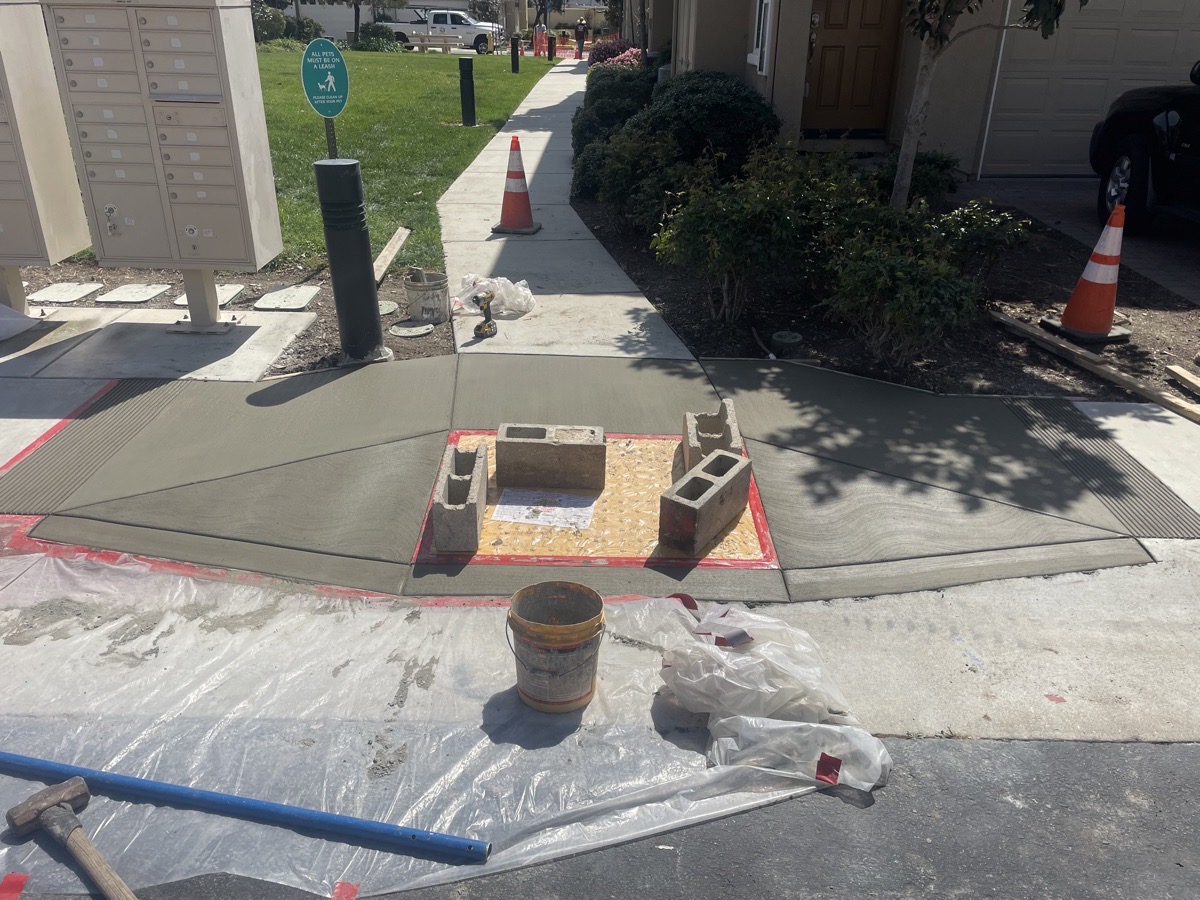
Concrete removal is also a logistics job. The path between the work and the truck deserves the same attention as the section being replaced.
Walk the full route
Start at the removal area and follow the intended debris path to loading. Note narrow gates, steps, finished floors, walls, irrigation, planting, overhead obstructions, parked vehicles and public-facing areas. Then walk the delivery path for base and concrete. The shortest route may not be the route with the least property risk, and the two directions may need different protection.
Name the protection by surface
A proposal should identify the retained surfaces needing protection and the planned method in project-specific terms. Interior finishes, coated paving, landscape and doorway thresholds do not all receive the same treatment. State who moves owner property, where equipment may stage, and what remains excluded. Protection reduces predictable exposure; it does not turn a work route into a risk-free area.
Define the end-of-day condition
For occupied sites, ask how openings, tools, debris and fresh work will be left when the crew departs. The plan may include barriers, covers, cleanup and a designated usable route. It should identify who checks the area and who receives a concern. This is especially useful when children, pets, tenants or regular deliveries are present and the work spans more than one day.
Keep adjacent restoration visible
Demolition may meet soil, planting, stucco, coatings, pavers or asphalt. The scope should say which disturbance is expected, what restoration is included, and what requires a separate approval after the area is open. Photographs before mobilization and after cleanup help distinguish retained preexisting conditions from the defined work. They are most useful when tied to the boundary map, not collected as an unorganized photo dump.
Prepare the property without creating new work
The owner can remove ordinary movable items and provide access as assigned in the proposal. Leave chipping, edge exposure and disconnection of site features to the approved work. Share known utility, irrigation and earlier repair information instead. Confirm where vehicles may park, where debris may wait briefly and whether a room or gate has time limits. On a managed property, give the crew one current contact rather than different instructions from multiple occupants. These steps make the route review more accurate while leaving demolition and protection decisions with the responsible project team.
Haul-route protection list
- Location
- ________________
- Surface
- ________________
- Exposure
- ________________
- Protection
- ________________
- Daily check
- ________________
- Closeout
- ________________
Before approval
- Debris route
- Delivery route
- Surface-specific protection
- Staging area
- End-of-day barrier
- Restoration list
Common question
Who moves planters or stored items?+
Assign that responsibility before mobilization and identify anything that cannot safely remain near the route.
Related AWC context
Rental Turnover Repairs: What To Check Before The Unit Sits Empty
Room and site lists, access, priorities and handoff.