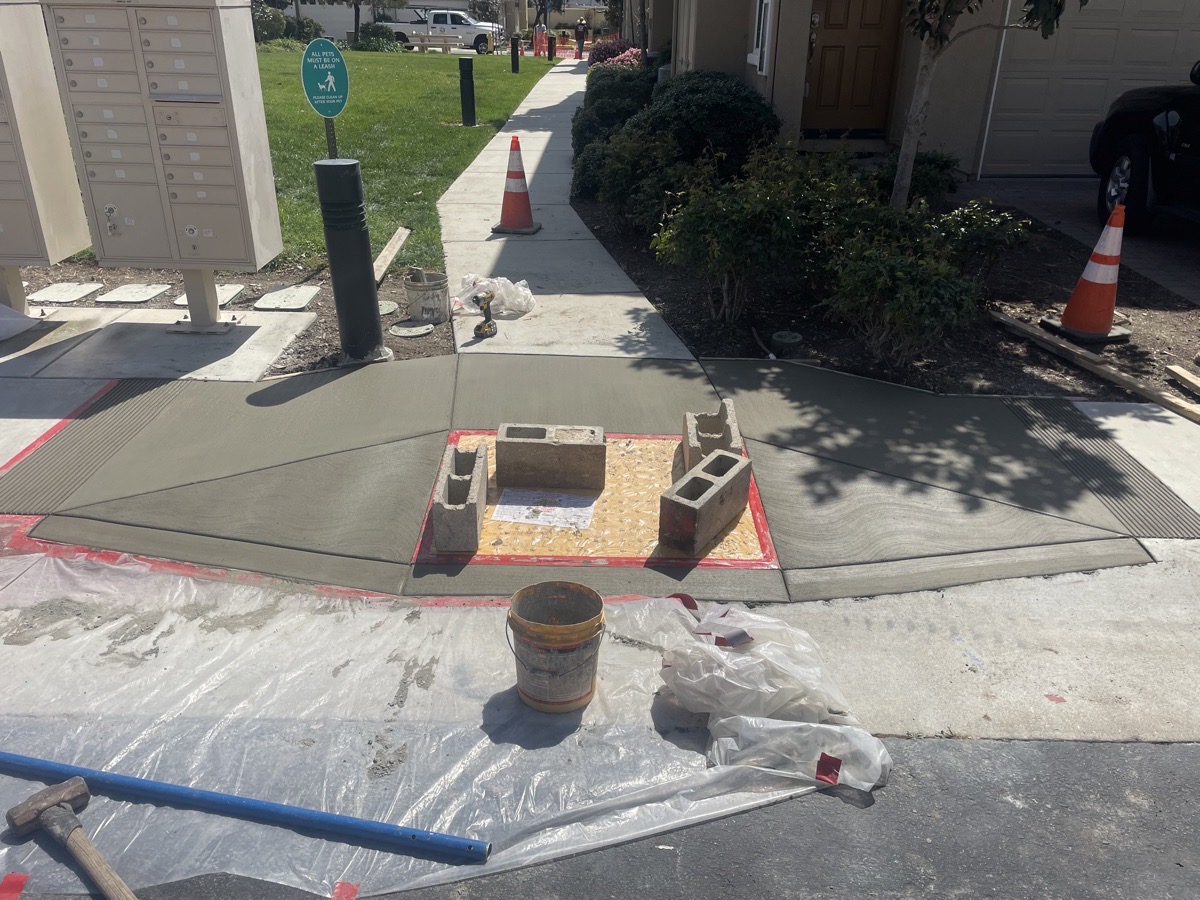
Placement day is not the same as completion day. The owner needs a simple handoff for appearance, protection, access and follow-up.
Approve finish intent before placement
Identify the intended texture, edge treatment and reference area or sample when one is useful. Discuss adjoining aged concrete and prior repairs so the customer understands where difference may remain. If color, coating or decorative work is proposed, keep the exact product and acceptance method in the written scope. A descriptive finish name establishes direction; the proposal should separately address the expected transition to older adjoining work.
Assign protection responsibilities
The contractor should provide project-specific direction for barriers and return to use. The owner or manager should identify deliveries, irrigation, pets, occupants and vendors who could affect the area. Put the contact and notice method in the handoff. Generic internet cure times are not a substitute for direction tied to the installed work, conditions and intended use.
Separate reopening stages
Walking, carts, vehicles, furniture and coating work are different uses. Ask the contractor to state which use may resume and when, including any conditions or areas that remain closed. Where an alternate route stays active, update the notice rather than removing every barrier at once. This gives residents clear instructions and avoids treating visual dryness as permission to use the surface.
Complete a written closeout
Review the approved boundary, visible finish, transitions, cleanup, surrounding restoration and any agreed photos or documents. Record remaining items with a responsible party and target next step. Note care or follow-up information actually provided for the project. Closeout does not prove concealed conditions, future movement or performance outside the written work; it confirms what was visibly reviewed and what still remains open.
Give occupants one final instruction
At handoff, replace earlier notices with one current message. Identify the areas still protected, the uses that remain restricted, the route available now and the person who can answer a question. If a later coating, landscape visit or punch item is scheduled, name it separately so occupants do not mistake concrete completion for the end of every related activity. Save the instruction with the approved scope and closeout photos. A short, current notice is safer and easier to follow than leaving residents to interpret old barriers, changing verbal advice or a surface that appears ready.
Concrete reopening handoff
- Area
- ________________
- Use
- ________________
- Direction
- ________________
- Notice
- ________________
- Barrier
- ________________
- Released by
- ________________
Before approval
- Finish reference
- Expected transition
- Barrier responsibility
- Use-specific reopening
- Remaining restoration
- Written closeout
Common question
Can an owner reopen concrete when it looks dry?+
Follow the project-specific direction from the contractor for the installed work and intended use.
Related AWC context
Procrastinating Maintenance - Where to start:
An older AWC article for organizing visible maintenance priorities; current site review governs.