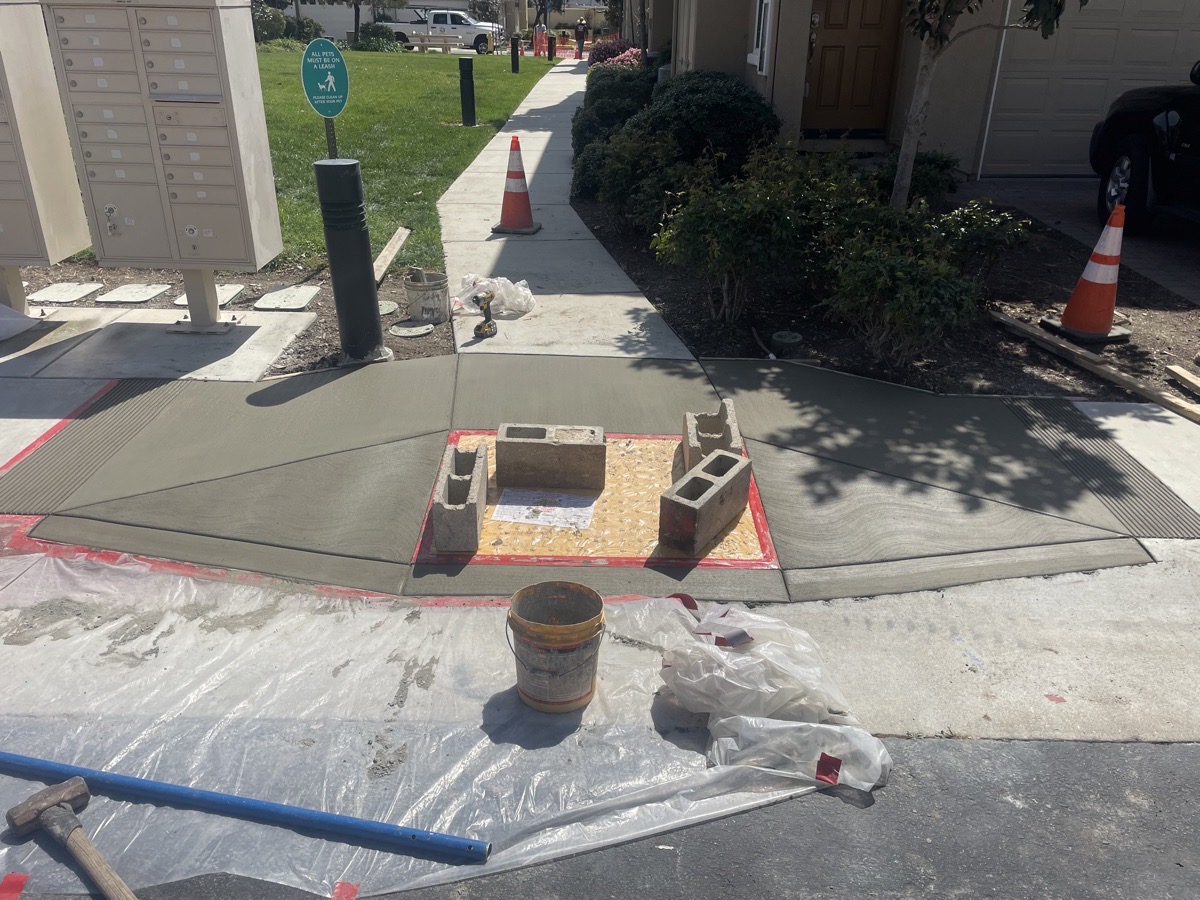
The finished concrete is only one part of the final view. Surrounding work must be named before it can be priced, scheduled and accepted.
Build a retained-surface inventory
List planting, irrigation, soil, edging, walls, posts, drains, pavers, asphalt, tile, coatings and paint beside the concrete. Photograph their condition and mark which items must remain untouched, which may be temporarily moved and which are planned for replacement. Avoid assuming that a concrete price includes every disturbed trade or finish.
Choose the restoration level
For each affected item, state whether the goal is reset, patch, replace, reconnect, refinish or leave ready for another contractor. Those words describe different outcomes. If the owner will handle planting or painting later, define the surface AWC will leave and the point at which responsibility changes. If AWC coordinates the related trade, place that work in the proposal with its own acceptance standard.
Use alternates for uncertain edges
Some disturbance cannot be measured until removal exposes the actual relationship between materials. A written alternate can define the unit, boundary or decision method without pretending the quantity is known. Ask for photos and an explanation of why the base scope no longer fits. Approval should happen before added restoration proceeds, except for immediate protection expressly authorized in the agreement.
Close the entire work zone
Final review should cover the concrete, transitions, route, staging area and surrounding restoration. Compare the completion photos with the original inventory. List remaining planting, coating, paint or owner work by exact area. A clean punch list prevents a good slab from being treated as a complete project while a gate, irrigation edge or wall patch remains unresolved.
Make the proposal easy to compare
When reviewing bids, put each surrounding item into the same three columns: protected and retained, included restoration, or excluded follow-up. Compare the stated result rather than assuming the lowest concrete line includes the same finish work. One proposal may reset an edge and leave it ready for planting; another may include planting restoration; a third may exclude the area entirely. Ask for the work-zone drawing or photos to use the same labels. This makes cost differences understandable and gives the final walk-through an agreed list instead of a debate about what restoration was implied.
Surrounding restoration list
- Item
- ________________
- Condition
- ________________
- Included result
- ________________
- Excluded work
- ________________
- Responsible party
- ________________
- Status
- ________________
Before approval
- Landscape inventory
- Irrigation responsibility
- Wall and coating limits
- Paver or asphalt edge
- Uncertain-edge alternate
- Whole-zone closeout
Common question
Is landscape restoration automatically part of concrete replacement?+
Only when the written proposal identifies the affected area and the restoration result.
Related AWC context
Behind AWC: The Part of Contracting You Don't Usually See
Trade coordination, documentation and closeout.